What Can Cause a Baby to Break Out in a Rash With Fever
Peel rashes in children
Childhood rashes are common. Near rashes are harmless and disappear without the need for handling. See your GP or telephone call GP out of hours service if your child has a rash and seems unwell, or if you're worried.
About pare rashes in children
It's especially important to be aware of the symptoms of meningitis, see section below.
Also beneath is data on some of the most common rashes in children.
This guide may requite y'all a ameliorate idea of the cause of the rash. But don't rely on it to diagnose your babe's condition if they show any signs of being unwell. Always meet a GP or contact a GP out of hours service for a proper diagnosis.
- read about causes of skin rashes in babies
Cellulitis
Cellulitis is an infection of the deeper layers of skin and underlying tissue.
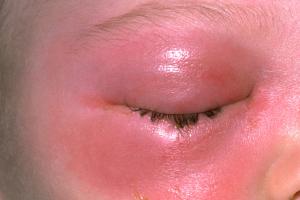
Nearly cellulitis
- the afflicted area will be ruby, painful, swollen and hot
- it often affects the legs, but tin occur anywhere on the body
- your child will probably besides have a fever
Contact your GP or GP out of hours service if an area of your child's peel turns red, hot and tender. Do this immediately if your child appears unwell. Cellulitis usually responds well to handling with antibiotics.
Chickenpox
Chickenpox is a viral illness that most children catch at some point. It most ordinarily affects children nether x years of age.
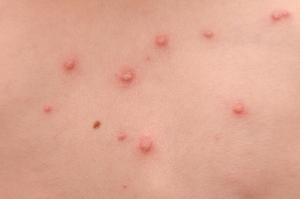
Near chickenpox
- it causes a rash of itchy spots that turns into fluid-filled blisters
- they crust over to class scabs, which after a while drop off
- some children only have a few spots, others have them over their entire body
- the spots are most likely to appear on the face, ears and scalp, under the arms, on the breast and belly, and on the arms and legs
There'south no specific treatment for chickenpox. Yous can take steps to relieve the symptoms. For example, paracetamol can assistance relieve fever (don't give aspirin to children under 16). Calamine lotion and cooling gels tin be used to ease itching.
Eczema
Eczema is a long-term condition that causes the peel to become itchy, red, dry and cracked. The most common type is atopic eczema, which mainly affects children merely can proceed into adulthood.
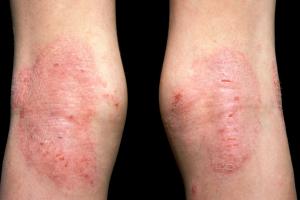
Well-nigh atopic eczema
- commonly develops behind the knees or on the elbows, cervix, eyes and ears
- information technology isn't a serious condition, but if your child later on becomes infected with the canker simplex virus, it can crusade the eczema to flare up into an outbreak of tiny blisters and will cause a fever
Erythema multiforme
Erythema multiforme is a skin rash (usually mild). It is caused by an allergic reaction to the canker simplex virus.
About Erythema multiforme
- the spots look similar targets, with a dark red middle and paler ring effectually the outside
- the hands or feet tend to exist affected beginning, followed by the limbs, upper torso and face up
- your kid will probably feel unwell and may have a fever, which y'all should exist able to treat with over-the-counter medicine
- it may take from two to six weeks before they experience amend
Come across your GP if your child has a rash and seems unwell.
In rare cases, erythema multiforme tin be triggered by a reaction to certain medications, such as an antibody or anticonvulsant.
This more severe course is called Stevens-Johnson syndrome and information technology tin be life-threatening.
Hand, foot and rima oris illness
Hand, pes and rima oris disease is a mutual, contagious infection.
About hand, foot and mouth disease
- causes mouth ulcers and spots and blisters on the palms of the hands and soles of the anxiety
- it's most common in young children (specially those under x), but it can too affect older children and adults
In that location'due south no cure for manus, human foot and mouth affliction. Information technology'southward easily spread, so yous should keep your kid away from school or nursery until they're better.
Your kid'southward allowed arrangement will fight the virus. It should clear upwardly afterwards about vii to 10 days.
Brand sure your child drinks plenty of fluid. If eating and swallowing is uncomfortable for them, give them soft foods, such equally mashed potatoes, yoghurt and soup.
Impetigo
Impetigo is a common and highly contagious skin infection that causes sores and blisters. It is caused by bacterial infection. It isn't usually serious and frequently improves within a week of treatment.
In that location are two types of impetigo – bullous and non-bullous.
Near bullous impetigo
- typically affects the torso (the area of the body between the waist and neck)
- causes fluid-filled blisters that burst after a few days to leave a yellow chaff
About non-bullous impetigo
- typically affects the peel effectually the nose and mouth
- causes sores that quickly burst to leave a yellow-brown chaff
See your GP if you lot think your child has impetigo. If it is impetigo, antibiotics will usually be prescribed. This is an effective treatment, clearing up the infection.
Keratosis pilaris ('chicken skin')
Keratosis pilaris is a common and harmless skin condition.
About keratosis pilaris
- the peel on the back of the upper arms becomes rough and bumpy, every bit if covered in permanent goose pimples
- sometimes, the buttocks, thighs, forearms and upper back can likewise be affected
- typically begins in childhood and gets worse during puberty
- some people find information technology improves after this and may even disappear in adulthood
There's no cure for keratosis pilaris. It often gets better on its own without handling. There are some measures you can take that may improve your child's rash. These include using non-soap cleansers rather than soap, and an emollient to moisturise their pare.
Your GP or pharmacist will be able to recommend a suitable cream.
Measles
Measles is a highly infectious viral illness that virtually commonly affects young children. It'southward now uncommon in Northern Ireland because of the effectiveness of the measles, mumps and rubella (MMR) vaccination programme, with high levels of vaccination.
Near measles
- the measles rash is reddish-brown blotches
- it usually starts on the face, head or upper neck and and then spreads outwards to the rest of the torso
- your child may too have a fever and cold-like symptoms
Call your GP surgery if you think your child has measles. It'south all-time to phone before visiting. This is because the surgery may need to make arrangements to reduce the gamble of spreading the infection to others.
Measles ordinarily passes in nearly seven to 10 days without causing further problems. Paracetamol or ibuprofen can be used to save fever, aches and pains (don't give aspirin to children nether 16).
Also, make sure your child drinks plenty of h2o to avoid aridity.
Molluscum contagiosum
Molluscum contagiosum is a viral peel infection.
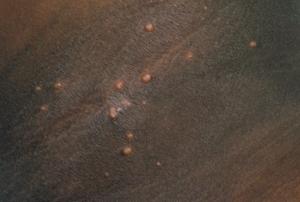
Almost molluscum contagiosum
- causes clusters of small, firm, raised spots to develop on the skin
- commonly affects immature children aged one to 5 years, who tend to grab it after close physical contact with another infected child
- is usually painless, although some children may experience some itchiness
- normally goes abroad within 18 months without the demand for handling
Molluscum contagiosum is highly infectious. Nigh adults are resistant to the virus. This means they're unlikely to take hold of it if they come up into contact with it.
Pityriasis rosea
Pityriasis rosea is quite a common pare status.
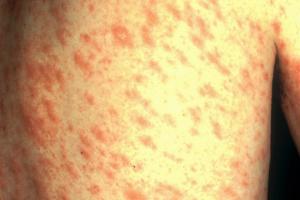
About pityriasis rosea
- causes a temporary rash of raised, ruby scaly patches to develop on the body
- most cases occur in older children and immature adults (aged between 10 and 35)
- the rash can exist very itchy
- in near cases, it clears upward without treatment in two to 12 weeks
- in rare cases it can last up to five months
Emollients, steroid creams and antihistamines can be used to help relieve the itchiness. The rash doesn't commonly go out scars. The skin can sometimes exist discoloured later.
Prickly heat (rut rash)
Prickly heat (heat rash) is also known as miliaria.
About prickly heat (estrus rash)
- information technology is an itchy rash of small, raised carmine spots that causes a stinging or prickly sensation on the skin
- information technology occurs when the sweat ducts in the outer layer of skin (epidermis) are obstructed
- you lot can get a heat rash anywhere on your body, simply the face, cervix, back, chest or thighs are nearly often affected
- infants can sometimes get a prickly rut rash if they sweat more than usual – for instance, when it's hot and boiling or if they're overdressed
It isn't a serious condition and rarely requires whatever specific treatment.
Psoriasis
Psoriasis is a long-lasting (chronic) skin condition.
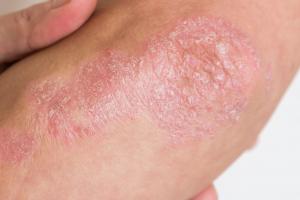
About psoriasis
- that causes red, flaky, crusty patches of skin covered with silvery scales
- the severity of psoriasis varies greatly from person to person- for some people, it's simply a small-scale irritation, just for others it can have a major bear upon on their quality of life
There's no cure for psoriasis. At that place are a number of treatments, available through your GP, which tin aid improve the symptoms and appearance of skin patches. For example, topical corticosteroids are creams and ointments that tin can exist practical to the skin.
Ringworm
Ringworm is a highly infectious fungal skin infection.
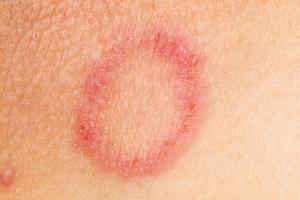
About ringworm
- causes a ring-like cherry or argent patch on the skin that can be scaly, inflamed or itchy
- often affects the arms and legs, only it tin appear about anywhere on the trunk
Other similar fungal infections can touch on the scalp, feet, groin and nails.
Ringworm can normally exist easily treated with antifungal medicines. These are available from a chemist's. Enquire your pharmacist if you need communication about treatment.
Ringworm of the scalp can cause scaling and patches of hair loss.
Scabies
Scabies is a contagious skin condition that'due south intensely itchy.
About scabies
- it'south acquired by tiny mites that burrow into the skin
- in children, scabies is usually spread through long periods of skin-to-skin contact with an infected adult or child – for example, during play fighting or hugging
- the mites similar warm places, such as skin folds, betwixt the fingers, nether fingernails, or effectually the buttock creases
- the mites leave pocket-sized scarlet blotches, which are oft found on the palms of the hands or soles of the feet
- in infants, blisters are usually found on the soles of the feet
Encounter your GP if you think your kid has scabies. Information technology'south not usually a serious status, but it does demand to exist treated. Your GP will prescribe a lotion or cream.
Carmine fever
Ruddy fever is a highly contagious bacterial infection.
About scarlet fever
- usually affects children between 2 and 8 years of historic period
- causes a distinctive pink-cherry rash, which feels similar sandpaper to touch and may be itchy
- often starts with a sore pharynx, fever and headache, with the rash developing two to v days later infection
- the rash usually occurs on the chest and tum before spreading to other areas of the body, such as the ears and neck
- sometimes a white coating may class on the tongue, which peels away after a few days, leaving the tongue red and bloated - this is known every bit a 'strawberry tongue'
Cherry fever usually clears upwards after about a week. But come across your GP if you think your child may accept it. Your GP will prescribe an antibody to treat it.
Slapped cheek syndrome
Slapped cheek syndrome is a viral infection that's mutual in children aged six to 10.
Near slapped cheek syndrome
- causes a distinctive bright red rash to develop on both cheeks
- this can look alarming, but information technology usually clears up by itself in one to three weeks
Unless your kid is feeling unwell, they don't need to stay away from school.
One time the rash appears, the infection is no longer contagious. It's a skilful idea to let your child'south school know about the infection.
Urticaria (hives)
Urticaria is too known as hives, weals, welts or nettle rash.
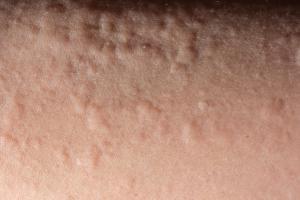
About hives
- is a raised, itchy rash that can affect ane function of the body or be spread across large areas
- information technology's a mutual skin reaction that oftentimes affects children
- occurs when a trigger causes loftier levels of histamine and other chemic messengers to be released in the pare
- these substances cause the blood vessels in the skin to open up, resulting in redness or pinkness, and swelling and itchiness
At that place are many possible triggers of urticaria, including allergens, such as food or latex, irritants, such as nettles, medicines, and physical factors, such equally heat or practise. Sometimes, a cause can't be identified.
The rash is usually short-lived and mild. It tin can often be controlled with antihistamines. Inquire your pharmacist for advice. Urticaria can be one of the start symptoms of a astringent allergic reaction known as anaphylaxis.
Call 999 immediately and inquire for an ambulance if you lot or someone else is experiencing anaphylaxis.
Meningitis
Meningitis is an infection of the protective membranes that surroundings the brain and spinal cord (meninges).
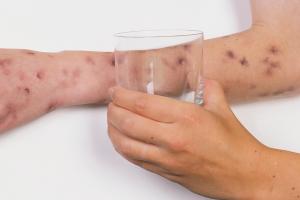
Nigh meningitis
- the classic rash associated with meningitis usually looks like small, red pinpricks at first
- it so apace spreads over the body and turns into red or regal blotches that won't fade when a glass is rolled over it (this won't ever develop)
Meningitis can be serious if not treated chop-chop. Telephone call 999 for an ambulance or become to your nearest emergency department if you think you or your child might be seriously ill.
More useful links
- How to use your health services
The information on this page has been adjusted from original content from the NHS website.
For further information see terms and conditions.
Source: https://www.nidirect.gov.uk/conditions/skin-rashes-children
0 Response to "What Can Cause a Baby to Break Out in a Rash With Fever"
Post a Comment